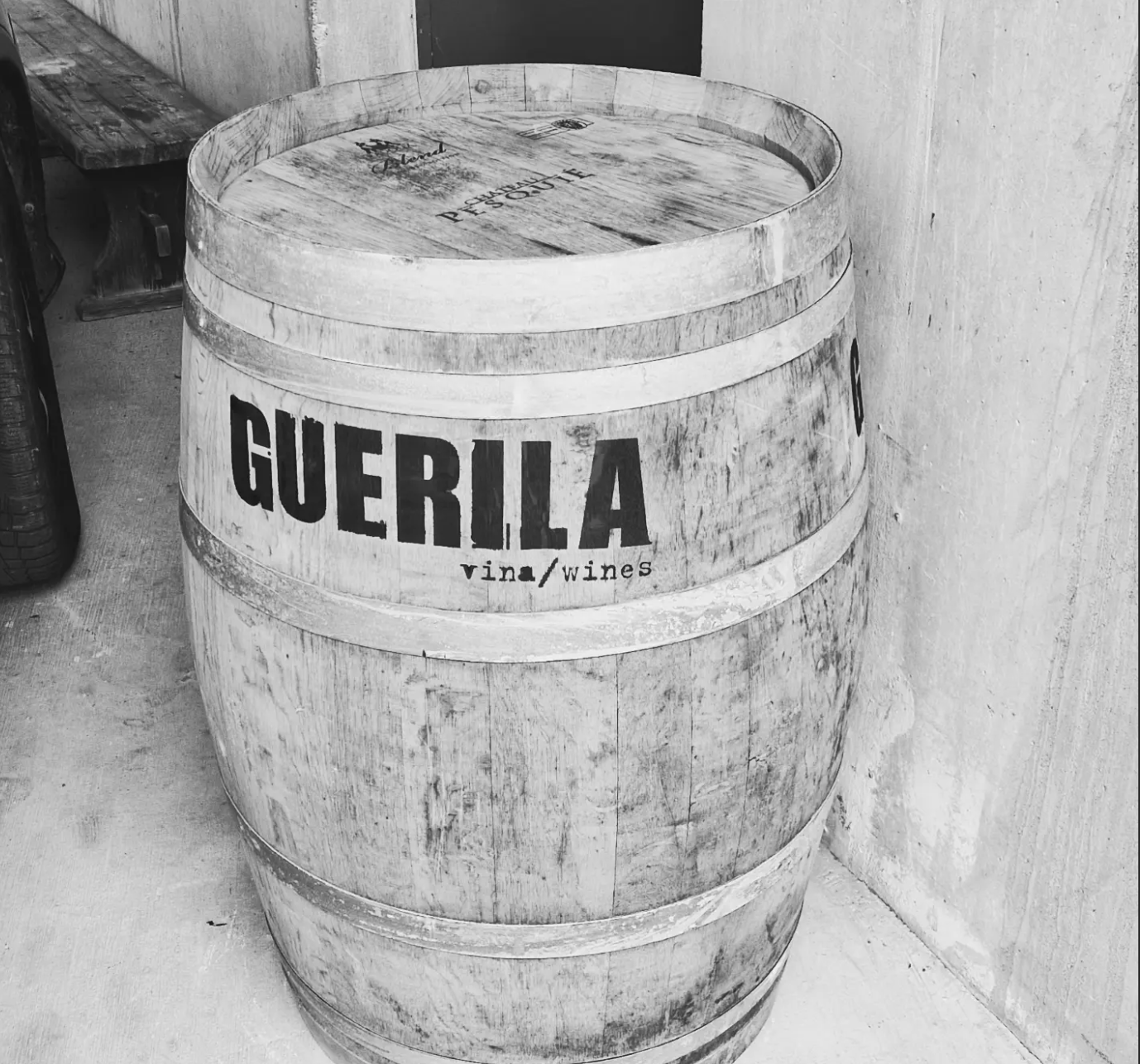
GUERILA
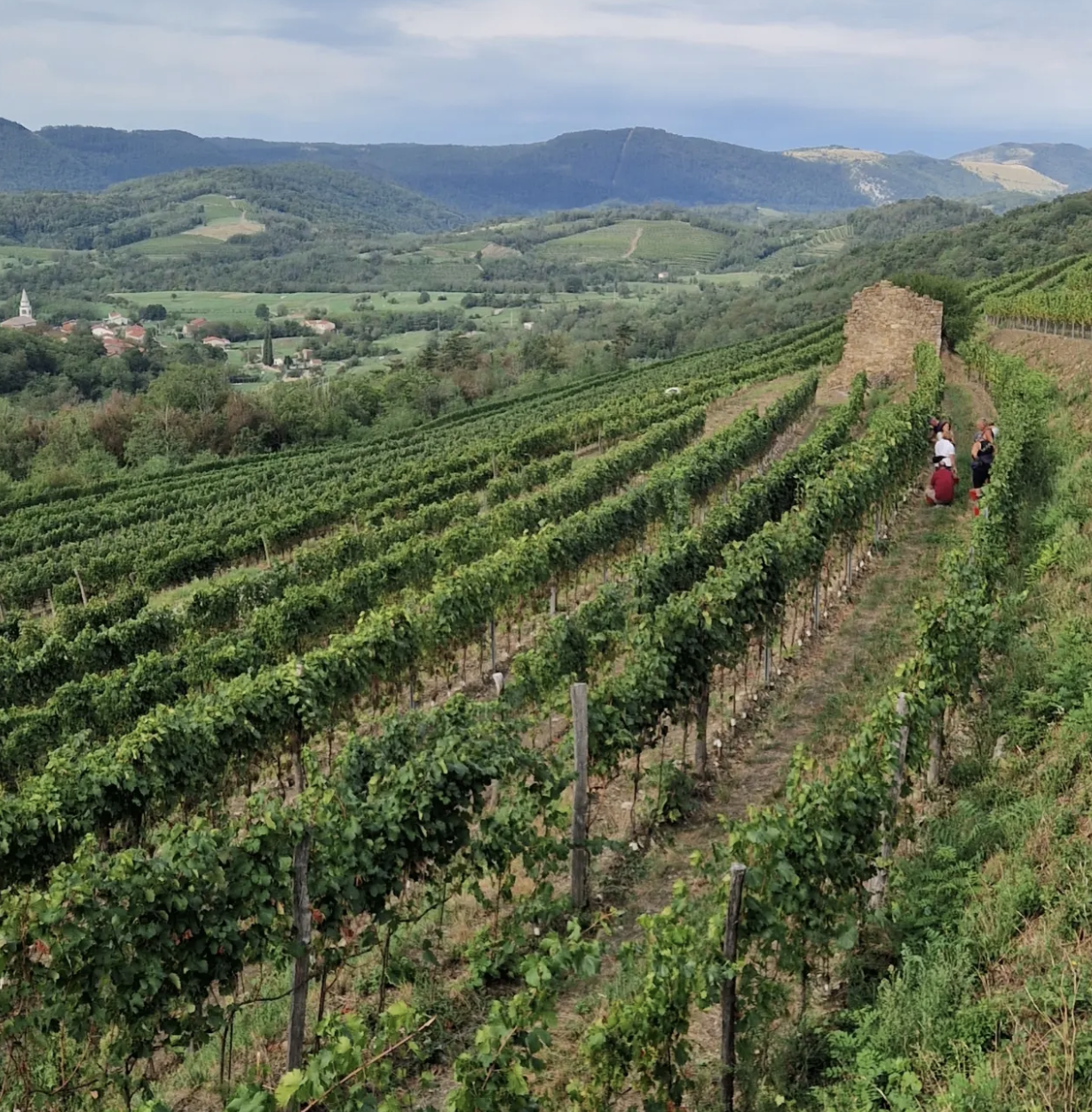
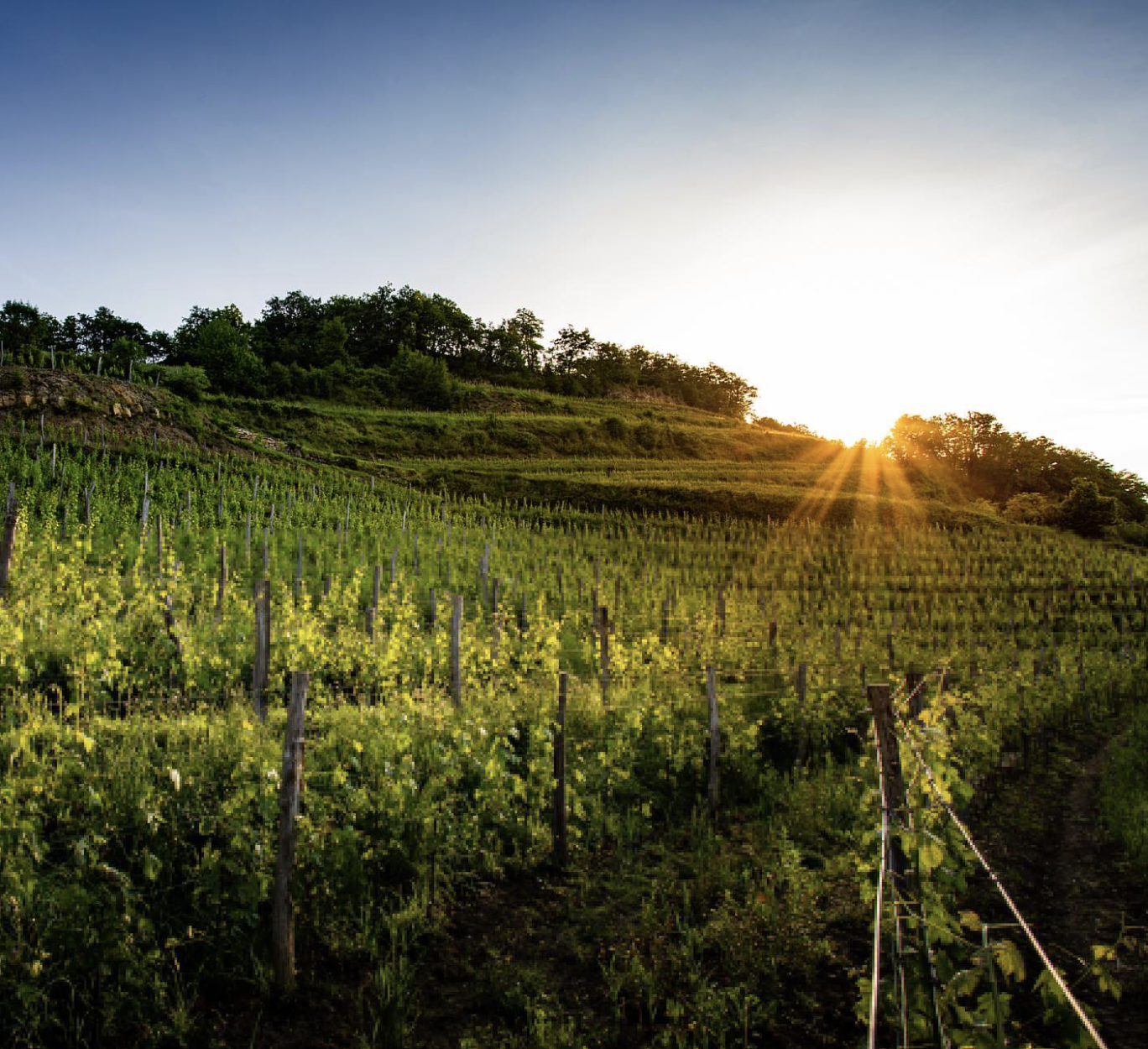
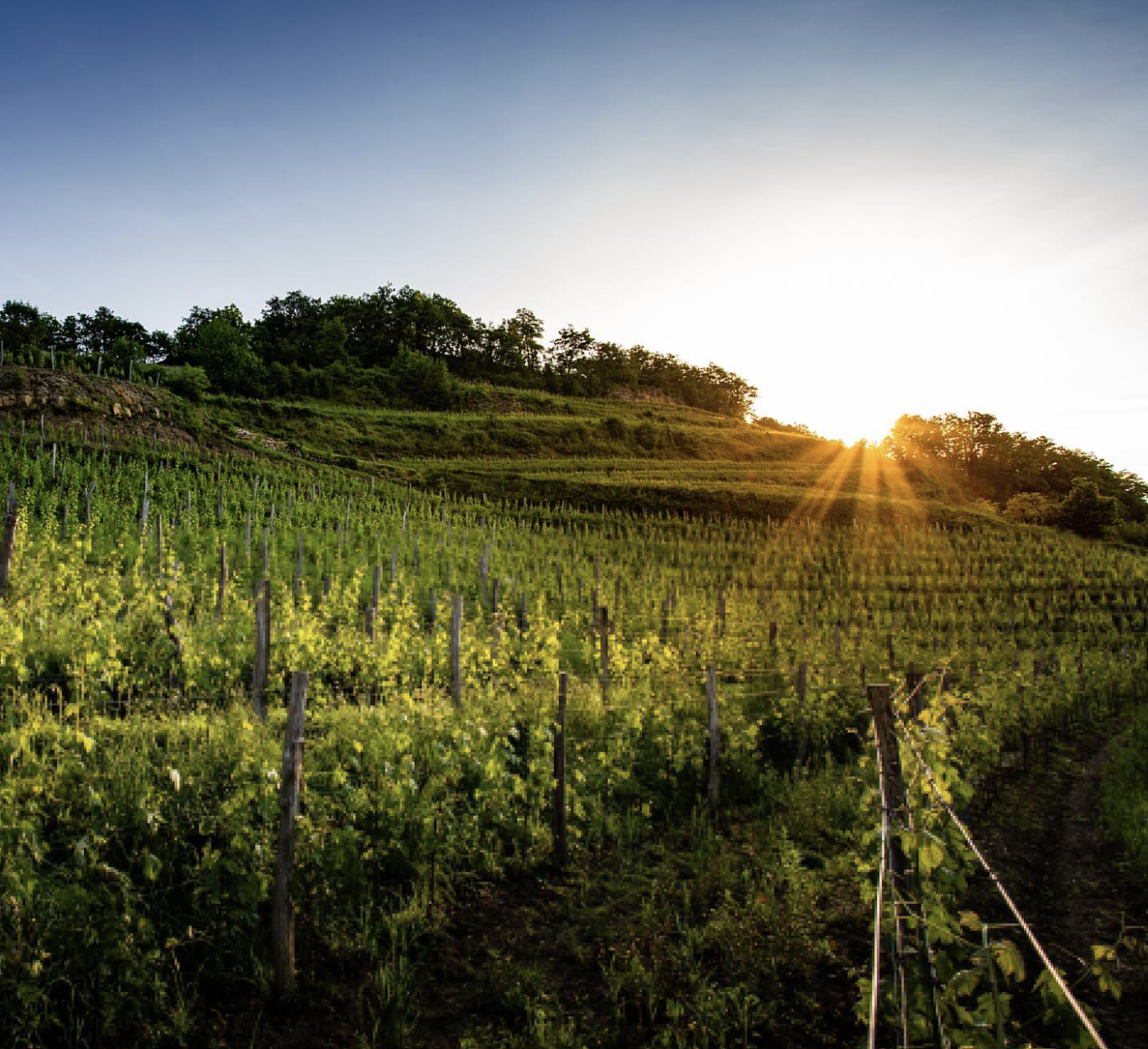
Guerila is a biodynamic wine estate in the Vipava Valley, within Slovenia's Primorska region—the country's westernmost wine-growing area, bordering Italy's Friuli Venezia Giulia. Founded in 2005 by Zmagoslav "Zmago" Petrič in the village of Planina, near Ajdovščina, the estate grew out of Zmago's decision to leave an earlier career and return to winegrowing full-time. His family already had vines in the valley, but he set out to build something more ambitious, hand-selecting the region's best sites and planting old, local, autochthonous varieties across six named vineyards—Vine, Gmajnca, Preske, Pile, Zavrh, and Gabrsko—totalling around 20 to 22 hectares and roughly 90,000 vines. The estate is anchored by a striking, purpose-built winery constructed from local glass, stone, and wood, positioned to command sweeping views across the valley below.
Primorska's climate is defined by two opposing forces meeting in the Vipava Valley—warm Mediterranean air drifting up from the Adriatic and cool Alpine breezes rolling down from the mountains, further shaped by the fierce local Bora wind that sweeps through regularly. Guerila's vineyards lean heavily on indigenous varieties suited to this push and pull: Pinela, Zelen, Rebula, and Malvasia among the whites, alongside smaller plantings of Merlot, Cabernet Franc, and Barbera. The soils are flysch, locally called ponca—a layered mix of marl and sandstone that leaves its mineral signature across the range. The vineyards earned organic certification in 2008, followed by full Demeter-certified biodynamic status in 2012, with all biodynamic preparations made in-house using the estate's own spring water.
Zmago's guiding belief is that authentic wine is made in the vineyard and only refined in the cellar—true ecosystems, in his view, only thrive where farming works with nature rather than against it. That conviction carries into his winemaking choices: rather than chasing the overtly aromatic style some producers coax from these same varieties through selected yeasts, Guerila's wines are deliberately quieter and more restrained—a decision Zmago stands by, believing it lets grape and terroir speak with greater honesty. Even the name nods to that same independent streak—a small, rebellious estate in one of Primorska's lesser-known corners, quietly committed to doing things the harder, more truthful way
Biodyna
Biodynamic
Natural
Socials
https://www.instagram.com/guerila_wines/
Wines
Guerila's wines are organised into three tiers, each reflecting a different level of skin contact and cellar ambition, but all built from the same biodynamic, hand-picked, indigenous fruit. The Classic line—Pinela, Zelen, Malvazija, a rosé, and the estate's sparklings—matures briefly in stainless steel after short maceration, prioritizing freshness and pure varietal character. Zelen shows herbal, mineral notes with a slick, fine finish, while Pinela leans spicier and more floral, finer-bodied and crisper by comparison. Malvazija brings floral, faintly Muscat-like aromatics with condensed minerality and firm, fine acidity.
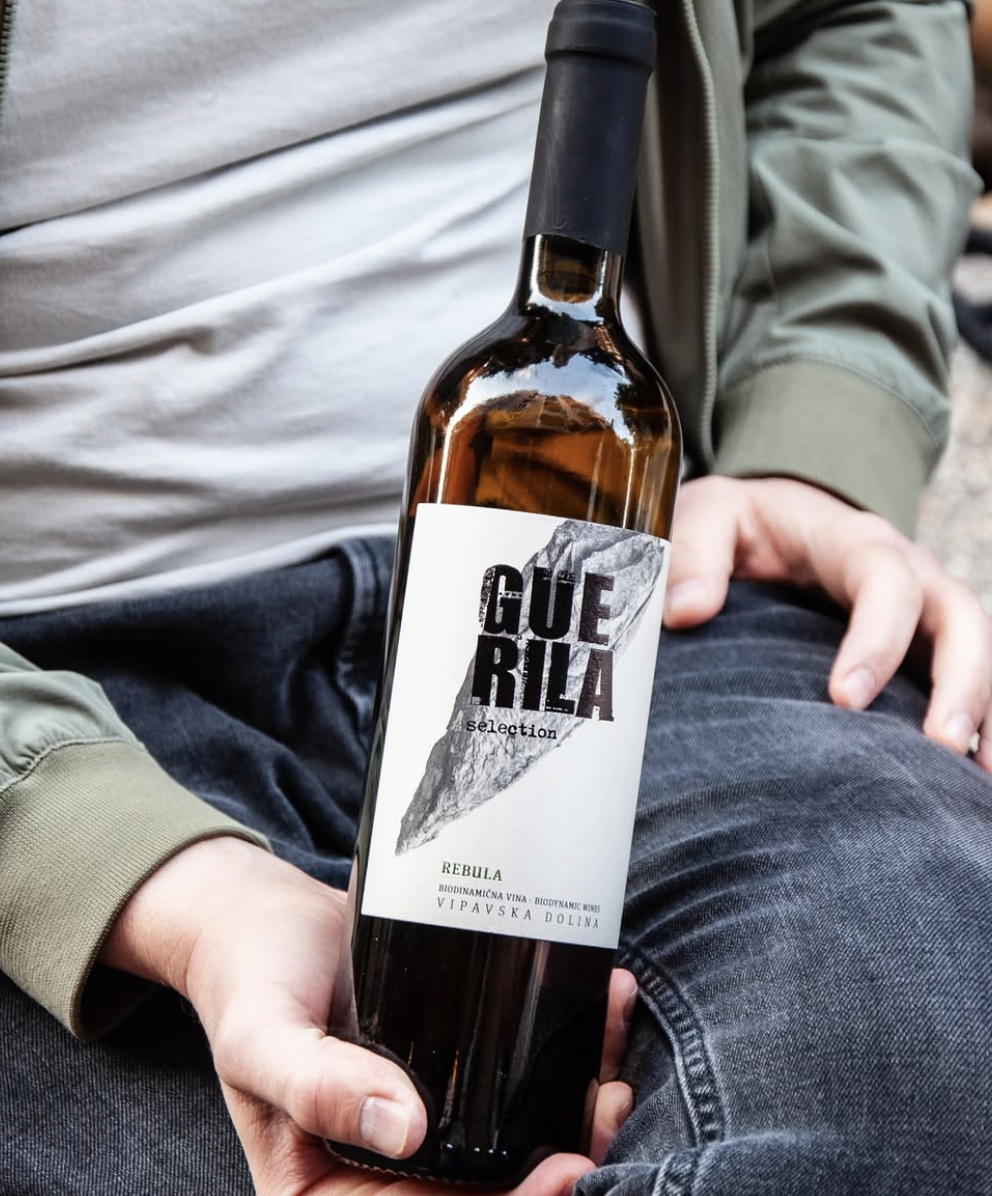
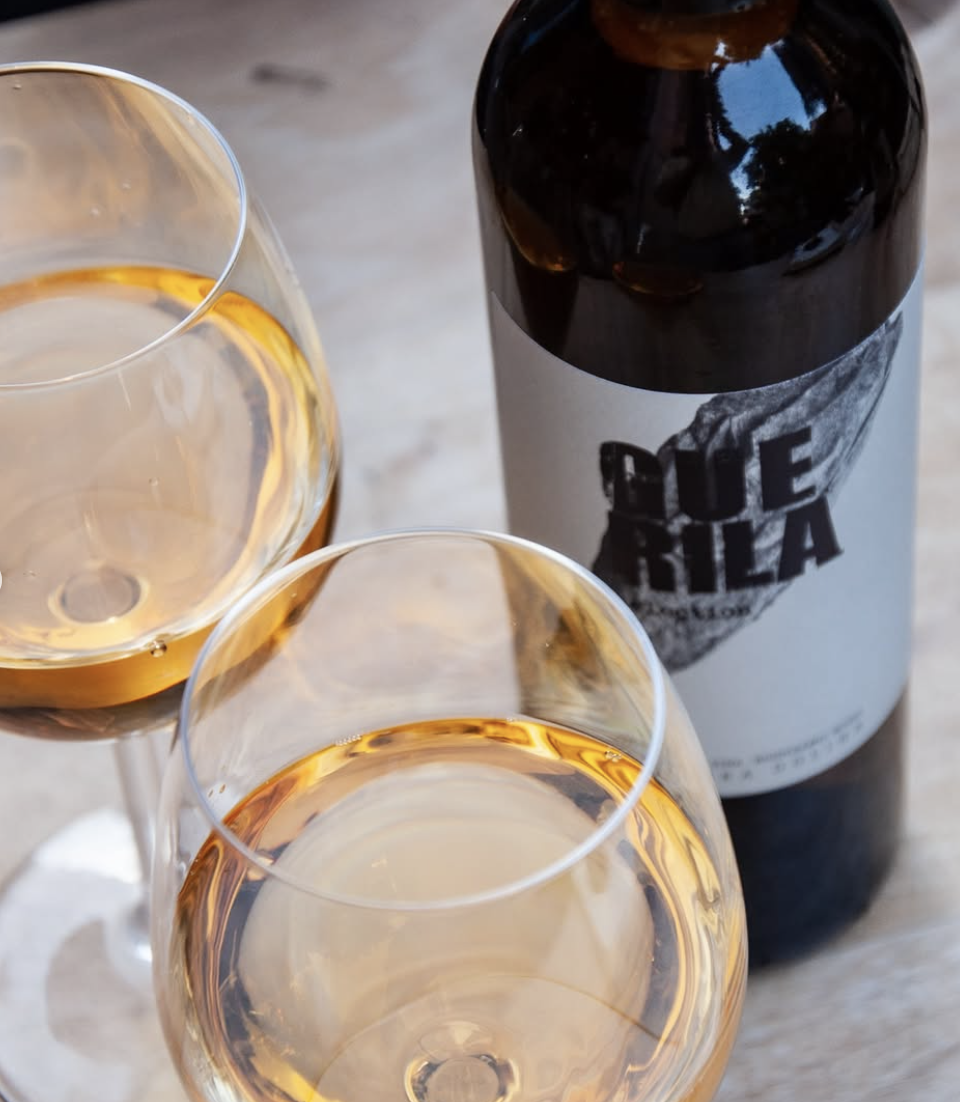
The Selection tier steps up intensity through prolonged maceration and aging in traditional large wooden barrels—elegant, more textured wines built for drinkability with real sophistication. Rebula Selection, made from the same grape as Friuli's Ribolla Gialla, spends about a week on skins before a year in old acacia barrels, yielding a golden, gently cloudy wine layered with dried flowers, herbs, spice, dried fruit, and honey—medium-bodied but with real freshness cutting through. Retro Selection is the estate's take on Vipavek, a traditional field blend of Malvazija, Rebula, Pinela, and Zelen picked and co-fermented on the same day, macerated on skins for around ten days, then aged a year in large foudres—fine-grained tannins, poised mineral aromatics, and a long, balanced finish. Castra Brut Nature, the estate's méthode traditionnelle sparkling built mainly from Rebula and Zelen, shows bright citrus and pear fruit with real energy and increasing precision under sparkling-wine consultancy.
At the top, the Extreme line pushes furthest—selected vintages given extended maceration (up to 45 days), fermented spontaneously, and aged in old oak or clay amphora for two years or more before release, bottled by the lunar calendar with minimal sulphur and no filtration. Rebula Extreme is the clearest expression of this ambition: deep amber in color, richly complex with dried flowers, herbs, dried fruit, honey, and a whisper of balsamic, built with real structure and genuine aging potential. Across all three tiers, the throughline stays consistent—biodynamic fruit, spontaneous fermentation, minimal intervention, and wines that trade polish for texture, letting Vipava's ponca soils and dramatic microclimate speak plainly in every glass.